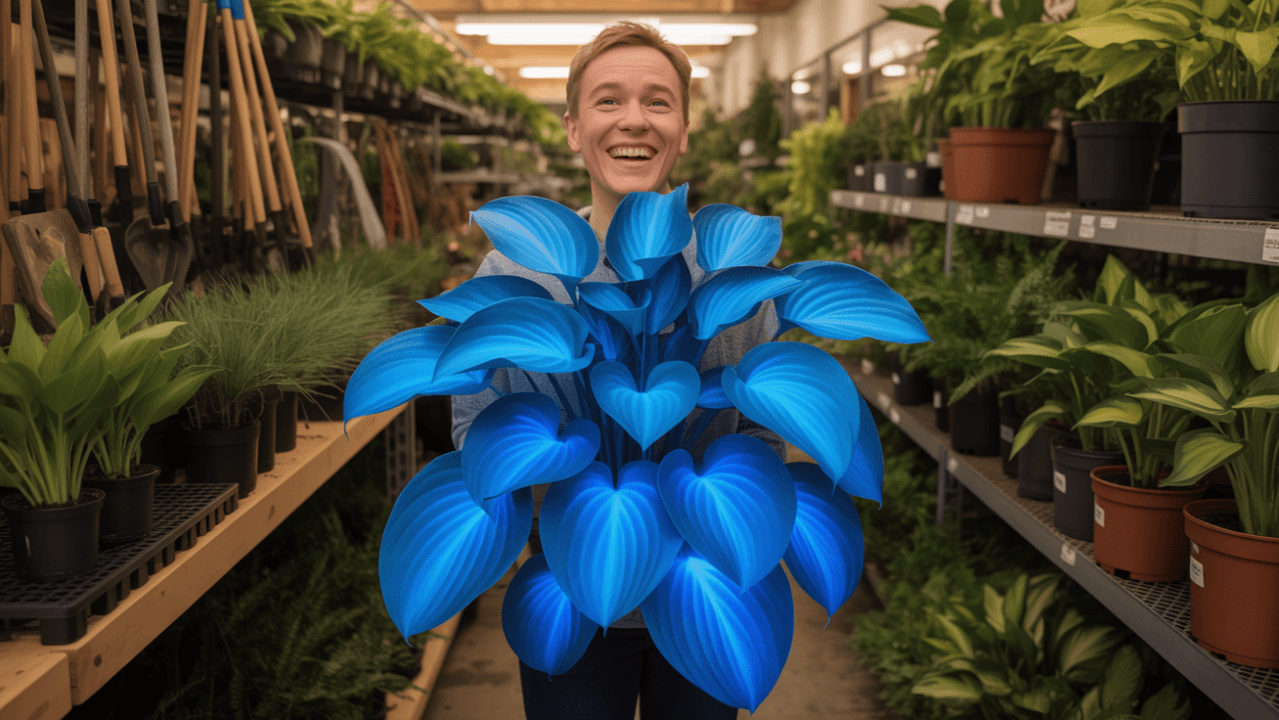
How To Scam Online Plant Buyers - Fast!
Whenever we talk with garden centres and nurseries about AI, it’s only a matter of time before the fluorescent blue Hosta is mentioned. Customers see these AI-generated photos on Etsy or Amazon and are looking for the same plant in your store. And guess what: you don’t have it, since it’s very obviously a fake plant. But what’s the story behind these sellers on Etsy and Amazon? And what’s the role of AI in this scam?
Buying seeds on Etsy or Amazon is simple, and with all the advertising they run on Google, it’s hard to avoid them. If you look up “hosta Seeds” on Google, this is what you will see:
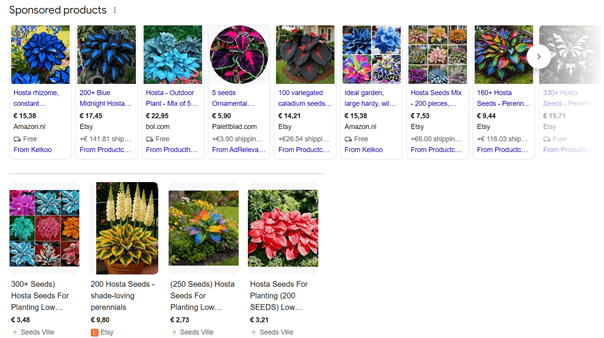
I would say it’s hard to find the real ones, not the fake ones. So what happens if you go to Etsy to buy a rainbow coloured Hosta? Do you get a warning, or are you bombarded with negative reviews? Not at all!
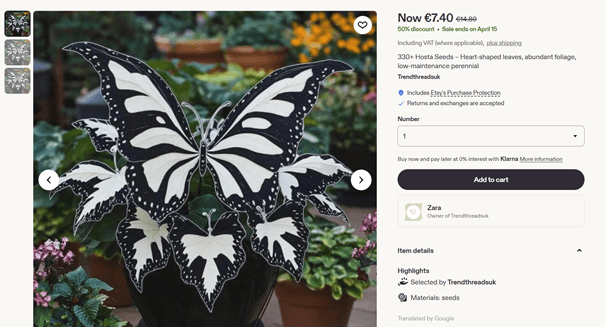
Even worse, you’re encouraged to buy this plant directly. The usual tricks are applied on the product page: a sale that ends soon, an X number of people who viewed the plant, and you’re protected by the Etsy Purchase Protection program. A lot of reasons to hit the buy button:
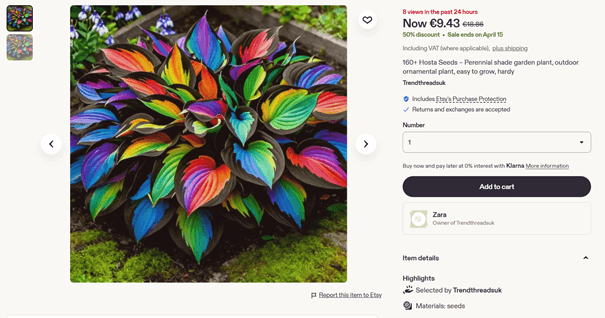
The scam is pretty simple. Consumers are buying seeds (not plants), so it will take a long time before they figure out they have been scammed. Most online scams mean that you buy something, you pay, but it won’t be delivered. In our industry, however, you can easily be scammed in a different way.
Since customers are getting seeds, they even rate sellers positively on platforms like Etsy. Online reviews play an essential role in the platform economy, so positive reviews like this will result in even more orders:
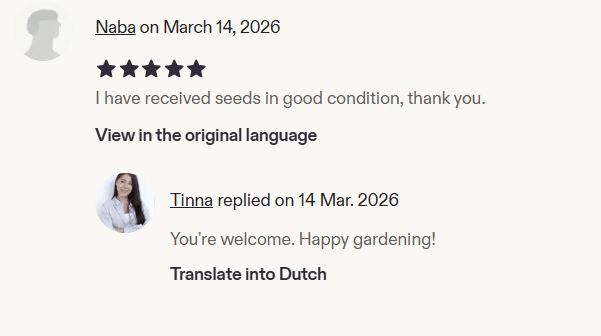
It’s also well known that scammers are placing (fake) orders in their own store to generate some positive reviews to gain momentum.
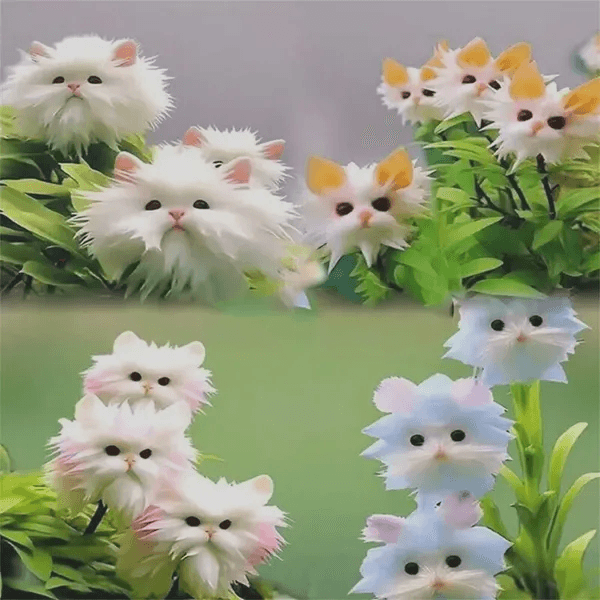
In all fairness, you might also wonder if the scam isn’t obvious. Do we really think an orchid in the shape of a cat is real? This photo is really listed as a plant which is for sale:
Or this plant in the shape of a butterfly, including feelers and eyes:
It’s Not A Small Problem
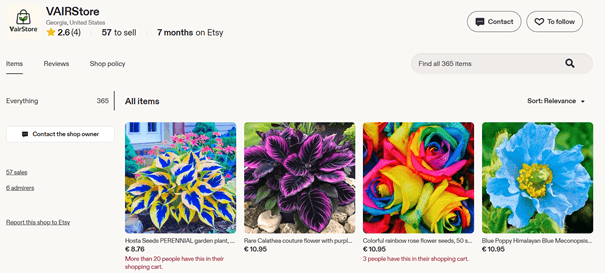
You might think that Etsy, Google, and Amazon are keen to fight these scammers, since they hurt the experience on their platforms. But that’s not really the case. This store has been on Etsy for 7 months with 57 sales:
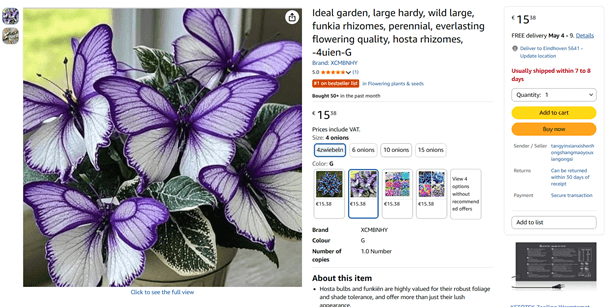
And this rare plant has been sold over 50 times in a single month on Amazon:
You can find hundreds of similar products and figures. The reason why you can find so many fake plants on Etsy and Amazon is that sellers are hiding themselves. You can open a store quickly, make a few thousand dollars and vanish. Only to come back again with a different store name a day later.
Most of these “sellers” are based in countries with a lower annual income than the US or Western Europe, so a plant that generates 50x €15 of revenue could be a month’s wage.
Since this is a pretty anonymous world, where buyers and sellers are both using a platform with little to no support from that same platform, it’s hard to get your money back if you learn that your butterfly-shaped hosta seeds are simply weeds.
Not a bad scam, is it?
I Want To Be Scammed!
As a consumer, you also have some responsibility in this process. If you look 1 minute at a product page, you can find the oddities and red flags. I looked at one of these famous Blue Hostas and found many oddities. For example, a brand named XCMBNHY doesn’t make sense:
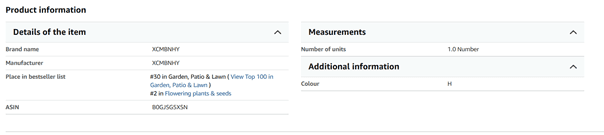
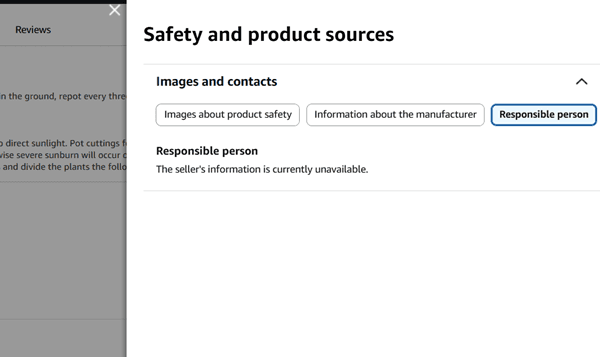
There’s no supplier or contact person available:
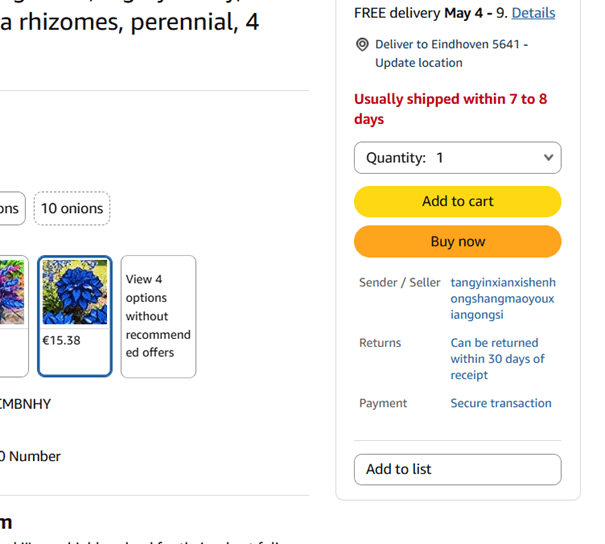
The seller’s name is a bit odd:
The seller’s email address is weird, you would expect a company name or something ending with @gmail.com. And their contact information is also a bit tricky to digest:
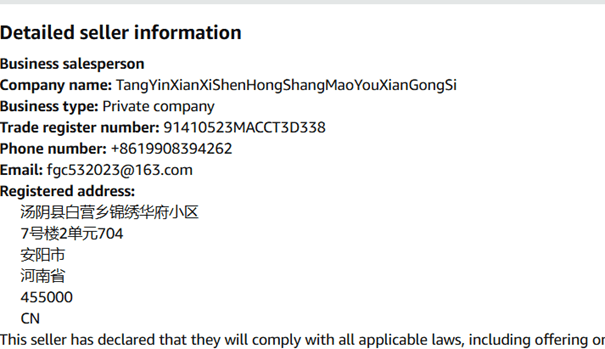
And last but not least, if you Google a real Trade Register Number, you do get a lot of company information. Not in this case, so that’s another clue something is off here:
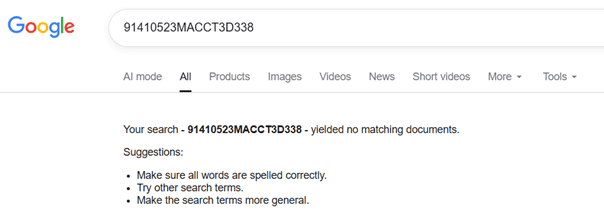
You could state that Amazon should protect buyers and do these kinds of checks. But whether you like it or not, they make money if people buy products on their platform, even if it’s a scam.
There are plenty of customers who reported sellers on Etsy and Amazon, but these platforms don’t really care about it. Here’s the comment of a scammed consumer on Reddit who reported a shop but the platform didn’t take it down:
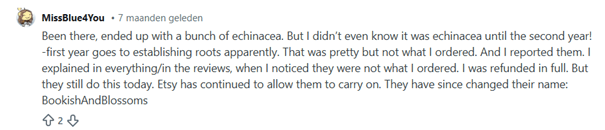
By refunding the customer, the platform hopes the problem is solved. And the truth is: most consumers won’t go through the process of submitting claims because it takes a lot of time, and the amount they can recover is limited.
The Role of AI
Whenever I talk to store owners about AI, the blue hosta is mentioned immediately. And it’s understandable there’s some scepticism around using AI in the industry. But using AI can also solve a lot of problems - and time.
Thinking about the blue Hosta: it shows that plant photos play an important role in the customer journey. Customers see a beautiful plant and are willing to hit the buy button.
That’s a good indicator that photos matter – a lot.
But they can be a pain to get: you need to go to multiple stock photo websites, contact suppliers and vendors to get them. And once you have them, you need to follow the licensing rights to avoid fines and penalties.
That’s how we can help you: we provide plant photos, data and garden center bench cards to inform your customers in the best possible way!
How to deal with this in a store?
Back to the customer who showed you the photo of the fluorescent blue Hosta on their mobile, asking (demanding!) you to sell these seeds. How can you explain that these plants are not real?
A few tips & tricks:
Customers should check the reviews of sellers. Ignore the positive reviews about seeds being delivered: does anyone state that the plant is exactly as promised?
If it’s a rare plant, the pricing should be in line. Most “rare seeds” are very cheap on these platforms. Too good to be true!
For how long has the seller been active? Any seller active for less than a year should be approached with caution, since it can take over a year for a plant to grow from seed to a cat-shaped orchid.
Give them the checklist mentioned above. Within a minute, they can figure out it’s a scam.
Eventually, if customers really think that a fluorescent blue Hosta is real, there’s nothing you can do about it. Platforms have credibility, and scammers are abusing that to sell fake plants.
Explaining how to recognise a scam, and explaining this to your customers is the only thing you can do.